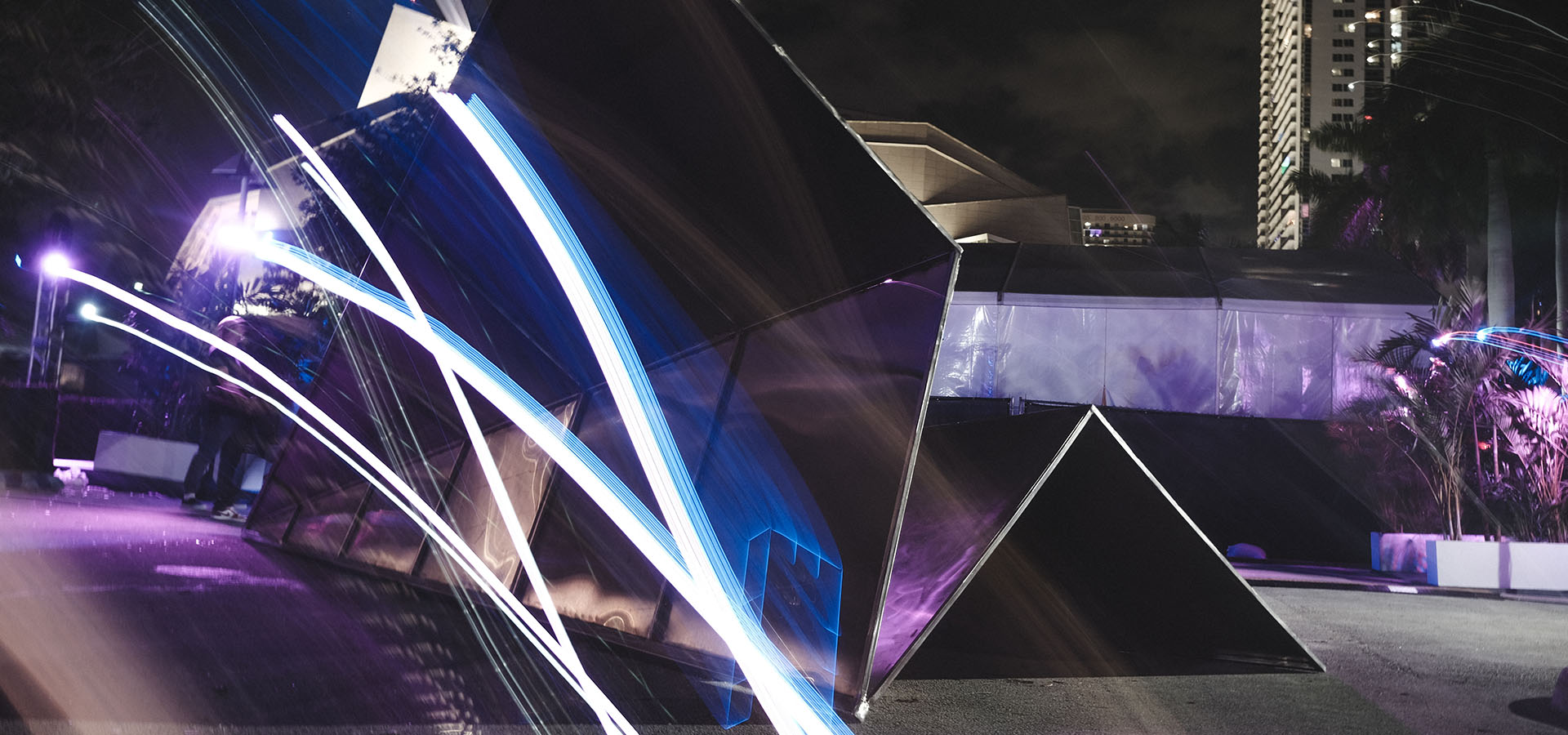




Miami in December has its own kind of electricity. The air hums with fairs, parties, VIP lists, and a constant shuffle between booths and openings—but for this trip, my focus was a single moment at the entrance to CONTEXT Art Miami. We weren’t just bringing a sculpture to Art Basel; we were building a threshold that every visitor would pass through before they stepped into the fair.
Landing in Miami
I arrived in Downtown Miami a few days before the fair opened, walking the stretch along Biscayne Bay where the ART MIAMI Pavilion sits at One Herald Plaza. Between the Venetian and MacArthur Causeways, it feels like a hinge point in the city—water on one side, the intensity of the art world on the other.
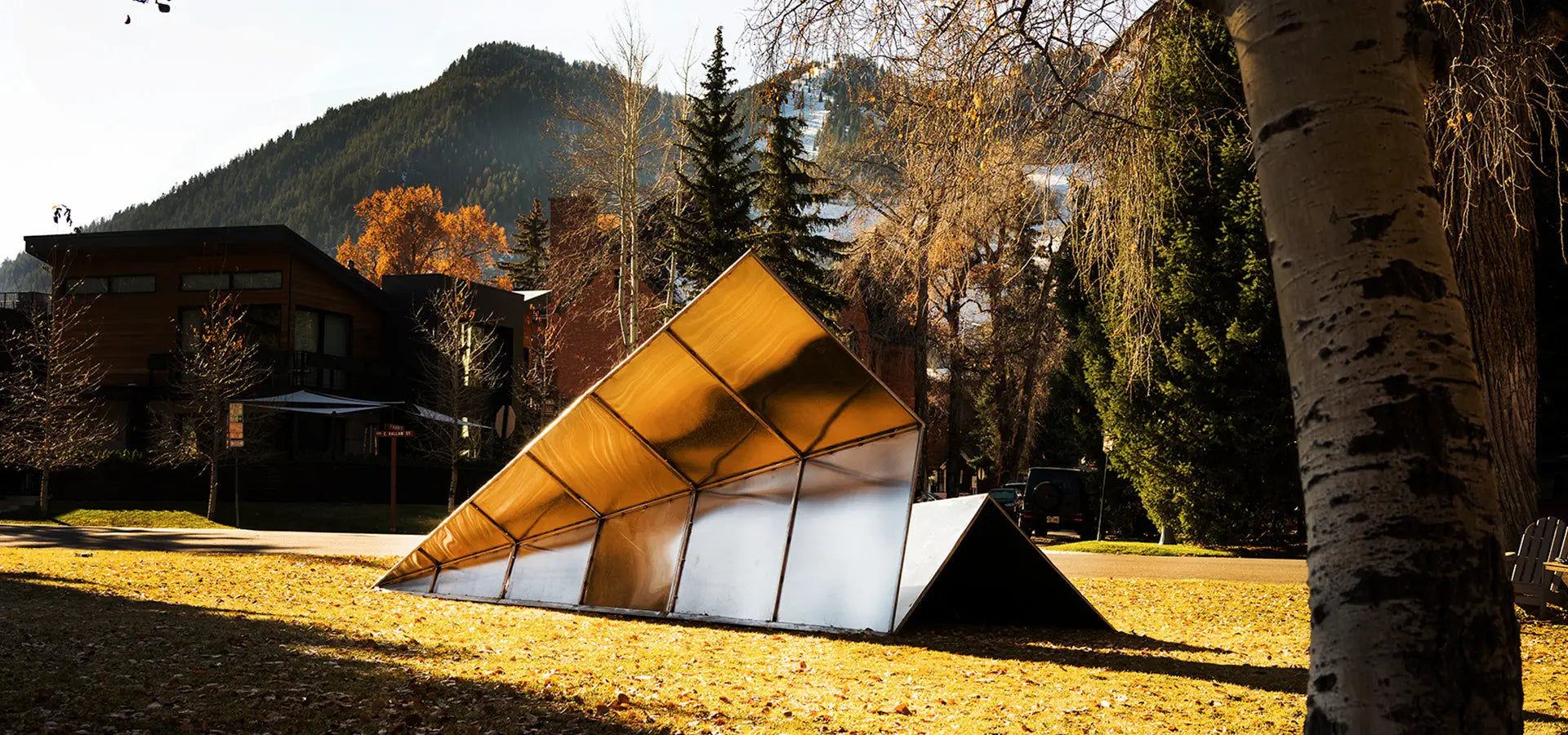
The plan was simple on paper: install a 25-foot stainless steel paper airplane at the main entrance to CONTEXT Art Miami, and let it be the first point of contact for nearly 80,000 visitors. In practice, it meant turning an in-between space—a walkway, a threshold—into a place where people might actually stop, look up, and feel something before they were pulled into the density of the fair.
Building a threshold, not just a sculpture
From the start, we knew this piece couldn’t behave like a typical art fair installation. Positioned at the main entrance, the airplane had to function as both landmark and invitation. We weren’t trying to compete with what was inside the tents; we were trying to change how people arrived there.
As the structure went up, the form of the airplane started to catch the Miami light—morning glare off the bay, the warm wash of late afternoon, the neon spill at night. Stainless steel became more than just material; it became a mirror for the movement of the week, reflecting visitors back to themselves as they approached.
80,000 arrivals, one shared moment
When the fair finally opened, the flow of people began—visitors, collectors, artists, curators, and friends weaving their way toward the entrance. At first, you could see the usual rhythm: check the wristband, scan the surroundings, move toward the doors. Then the sculpture disrupted that autopilot.
I remember watching people slow down before they even realized why. They would approach the sculpture out of curiosity—but then stay because something shifted. Some took photos, some stood quietly, some walked around the base as if mapping the space they were about to enter. Without a sign telling them what to do, the work introduced its own pace.
What surprised me most was how quickly the installation became a site of continuous interaction. People didn’t just pass by; they gathered. Over the course of the week, it turned into a kind of informal commons for the fair—a place where strangers compared notes, where friends reconnected, where a walk to the entrance became a conversation.
What slowing down revealed
Inside the fair, everything moves fast—booths, conversations, decisions. Outside, in the shadow of this airplane, the cadence shifted. People started talking about things they weren’t expecting to talk about. Not just art, not just transactions, but where they were at in their lives and what they were working toward.
We didn’t hand out prompts or scripts. There were no instructions printed on the ground. The sculpture did the asking simply by being there. Questions surfaced organically: What are you here for? What are you building? What’s your next launch? These weren’t always spoken out loud, but you could feel them hanging in the air.
At some point, it became clear—this wasn’t about placing a sculpture at the entrance. It was about creating a moment people could step into before everything else. A pause between the outside world and the commercial intensity of Art Basel, where intention could take shape before anything was bought, judged, or curated.
Context: Art Miami
CONTEXT Art Miami, located at the ART MIAMI Pavilion at One Herald Plaza, is an international contemporary art fair that pulls together galleries, artists, and collectors from around the world. Situated on Biscayne Bay between the Venetian and MacArthur Causeways, it’s a crossroads where new work meets a global audience in a condensed, high-energy format.
Being presented as the featured exhibition at CONTEXT meant the airplane wasn’t hidden in a booth or tucked into a side aisle. It was the gateway—a piece everyone encountered whether they planned to or not. That visibility carried responsibility: if we were going to stand at the front door, we wanted to offer something more than spectacle.
Where Launch Intention lands next
Art Basel Miami 2022 was one stop in a longer flight path for Launch Intention. From touring activations like LA Art Show in Los Angeles to installations at places like Powder Mountain in Utah and Osage Park in Arkansas, each location becomes another opportunity to turn arrival into reflection.
Whether the airplane is landing on a marina in San Francisco or at a high school campus in Los Angeles, the mission is the same: create spaces where people can name what they’re moving toward and feel supported in taking their next step. In Miami, that mission unfolded in the middle of one of the art world’s busiest weeks—and it still managed to slow people down.
As we packed up and the pavilion emptied out, what stayed with me were not just the images of the sculpture against the Miami sky, but the conversations underneath it. For a few days in December, a 25-foot paper airplane turned a fair entrance into a launch pad for intention—and that’s the kind of trip that doesn’t end when the plane comes down.